Polish road signs — learn the group, meaning and rule
The complete classification used in Polish traffic law. Choose a group, learn how it works and review examples that often determine the answer in the theory exam.
Knowledge base
10
groups of signs and signals with dedicated pages
All groups of Polish road signs
The code letter indicates the sign's function. Start with the group you find most difficult.
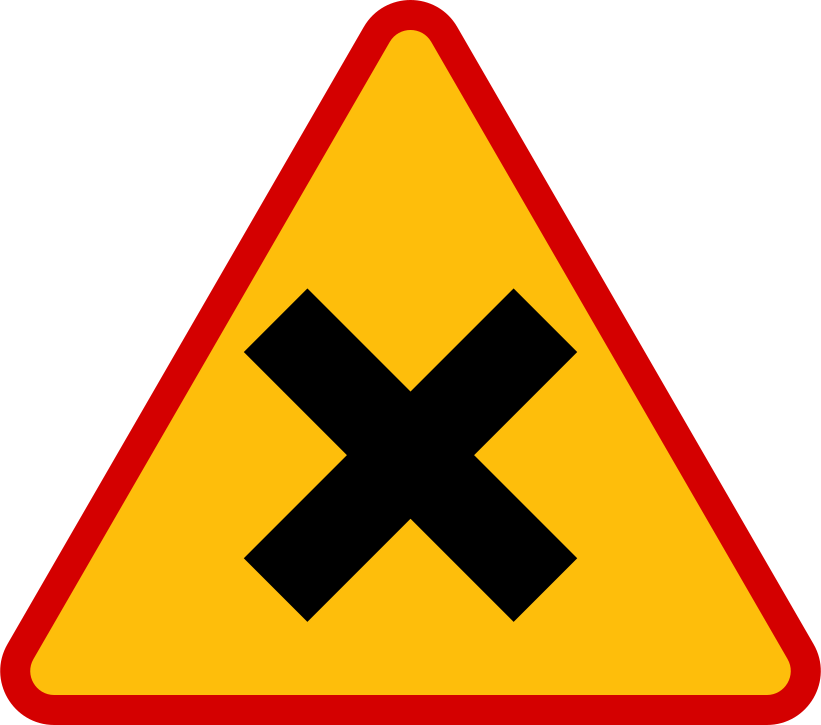 Group AWarning signsThey warn of a place where danger exists or may arise, giving drivers time to respond appropriately.
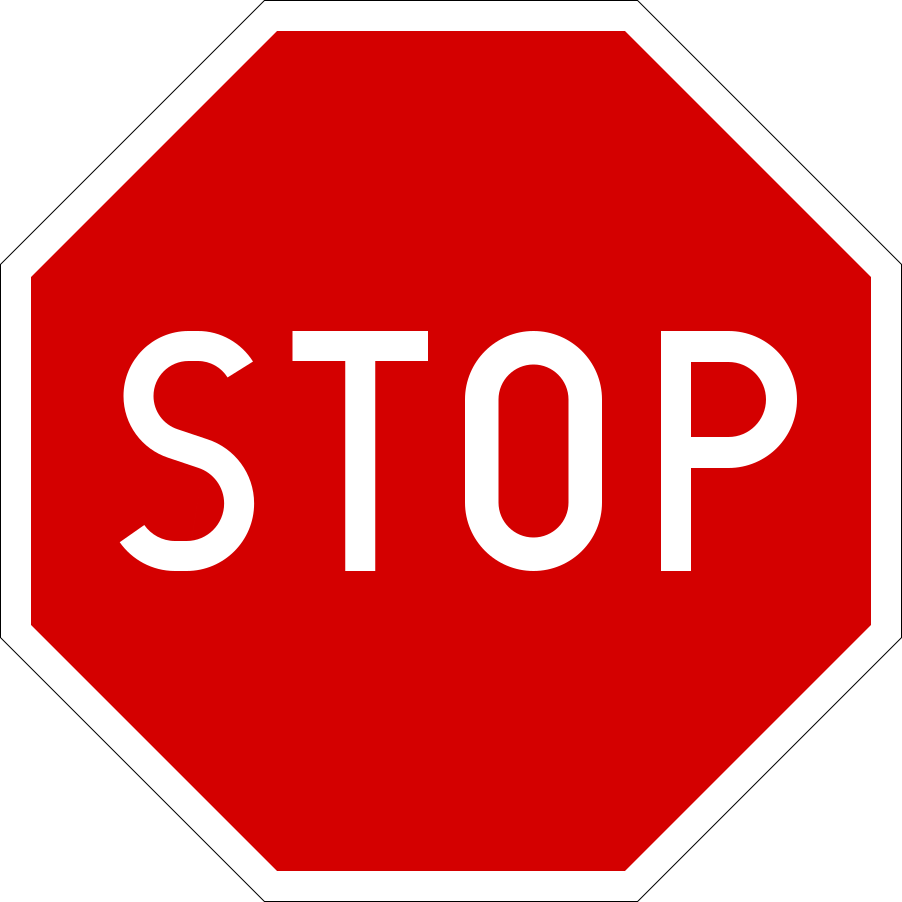 Group BProhibition signsThey restrict traffic, behaviour or driving parameters. In the exam, both the symbol and where the prohibition begins and ends are important.
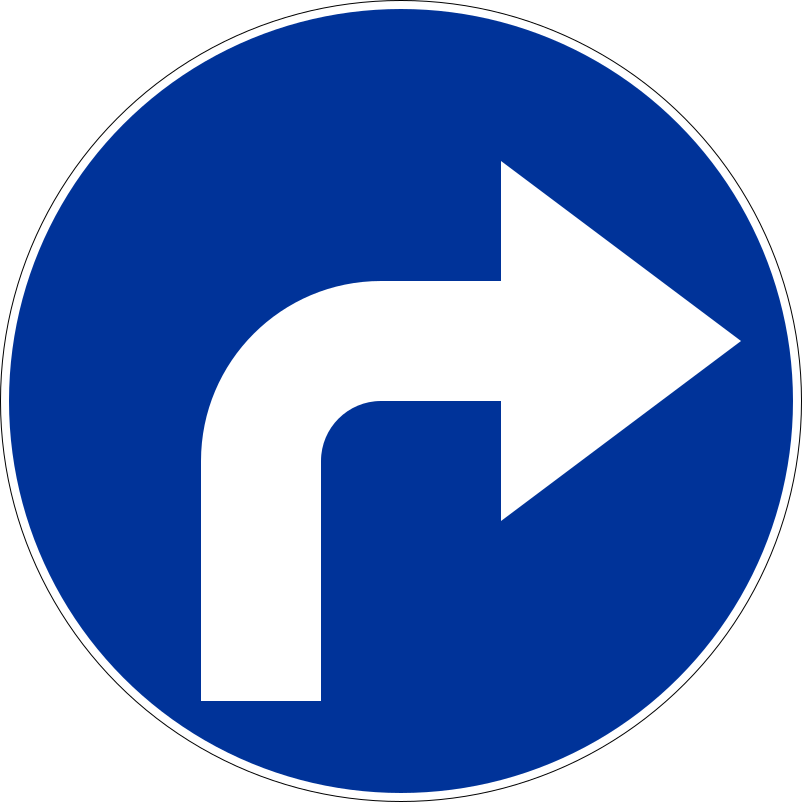 Group CMandatory signsThey prescribe how you must drive or behave. They can indicate a direction, a minimum speed or a route intended for specified users.
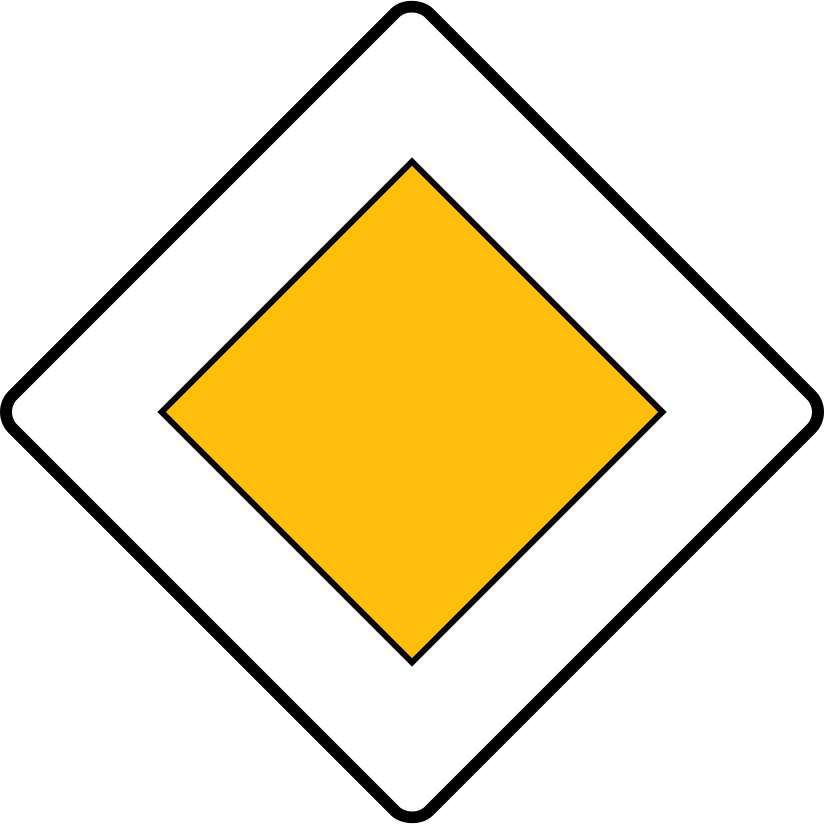 Group DInformation signsThey describe the road, how it is used and roadside facilities. Some of them establish specific traffic rules.EGroup EDirection and locality signsThey guide you to places and facilities, announce exits, show routes and road numbers, and help you choose the correct lane early.
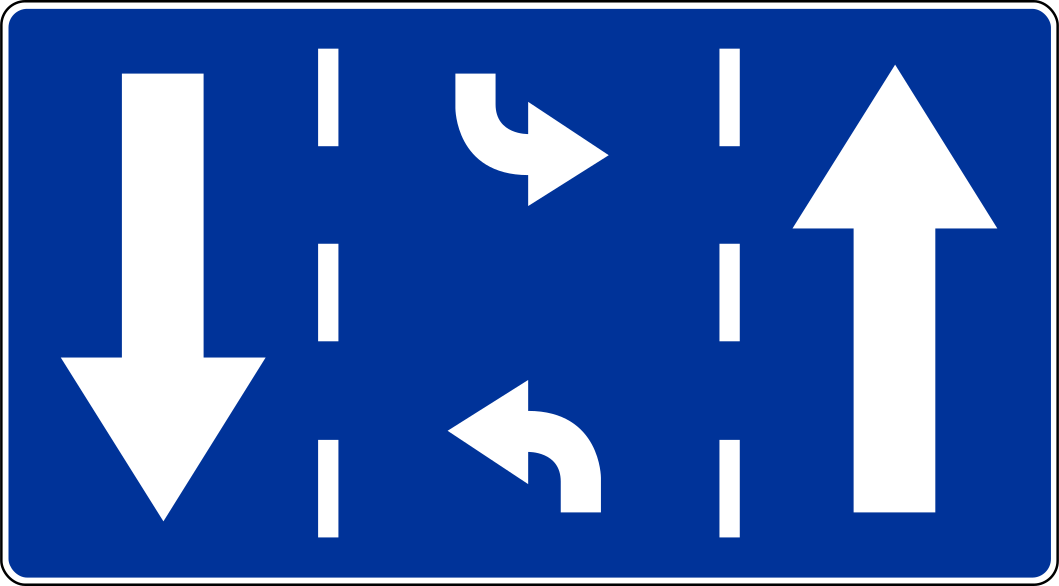 Group FSupplementary signsThey complete the picture of traffic organisation by showing lane paths, how to drive along a section or a special situation ahead.
 Group GSigns before railway crossingsThey mark the approach to a railway crossing and help identify its immediate vicinity and the number of tracks.TGroup TSupplementary plates for road signsThey clarify the main sign by specifying a distance, section length, road layout, hazard, vehicle group or exception.
 Group PRoad markingsLines, arrows, words and symbols on the surface designate lanes, directions, stopping places and areas for specific road users.
 Group STraffic-light signalsThey control traffic at junctions, crossings and other road sections. Their meaning depends on the colour, signal type and direction concerned.
First check who controls the traffic
- 1Directions given by a person controlling traffic
- 2Traffic-light signals
- 3Vertical signs and road markings
- 4General traffic rules
Do not memorise only the picture
- Recognise the group by its shape, colour and code.
- Name the duty, prohibition or information conveyed by the sign.
- Check any supplementary plate and the sign's scope.
- Read the sign together with signals, markings and the road situation.
Legal basis
The meaning of signs is defined by law
The descriptions follow the Polish regulation on road signs and signals, including changes effective from 19 February 2026. For legal matters, always verify the current status of the act in the official ELI system.
Frequently asked questions about Polish road signs
What types of road signs are used in Poland?
The main groups are warning signs A, prohibition signs B, mandatory signs C, information signs D, direction and locality signs E, supplementary signs F, railway-crossing signs G, supplementary plates T and road markings P. Traffic-light signals form group S.
Which takes priority: traffic lights or road signs?
Directions from a person controlling traffic take priority over signals and signs. When operating, traffic lights take priority over signs regulating right of way.
Is a supplementary plate under a sign binding?
Yes. It forms part of the sign assembly and can specify a distance, scope, road layout, affected users or exceptions to the main sign.
Do yellow road markings take priority over white ones?
Yellow markings used for temporary traffic organisation indicate how to drive where permanent white markings have also been left in place.